
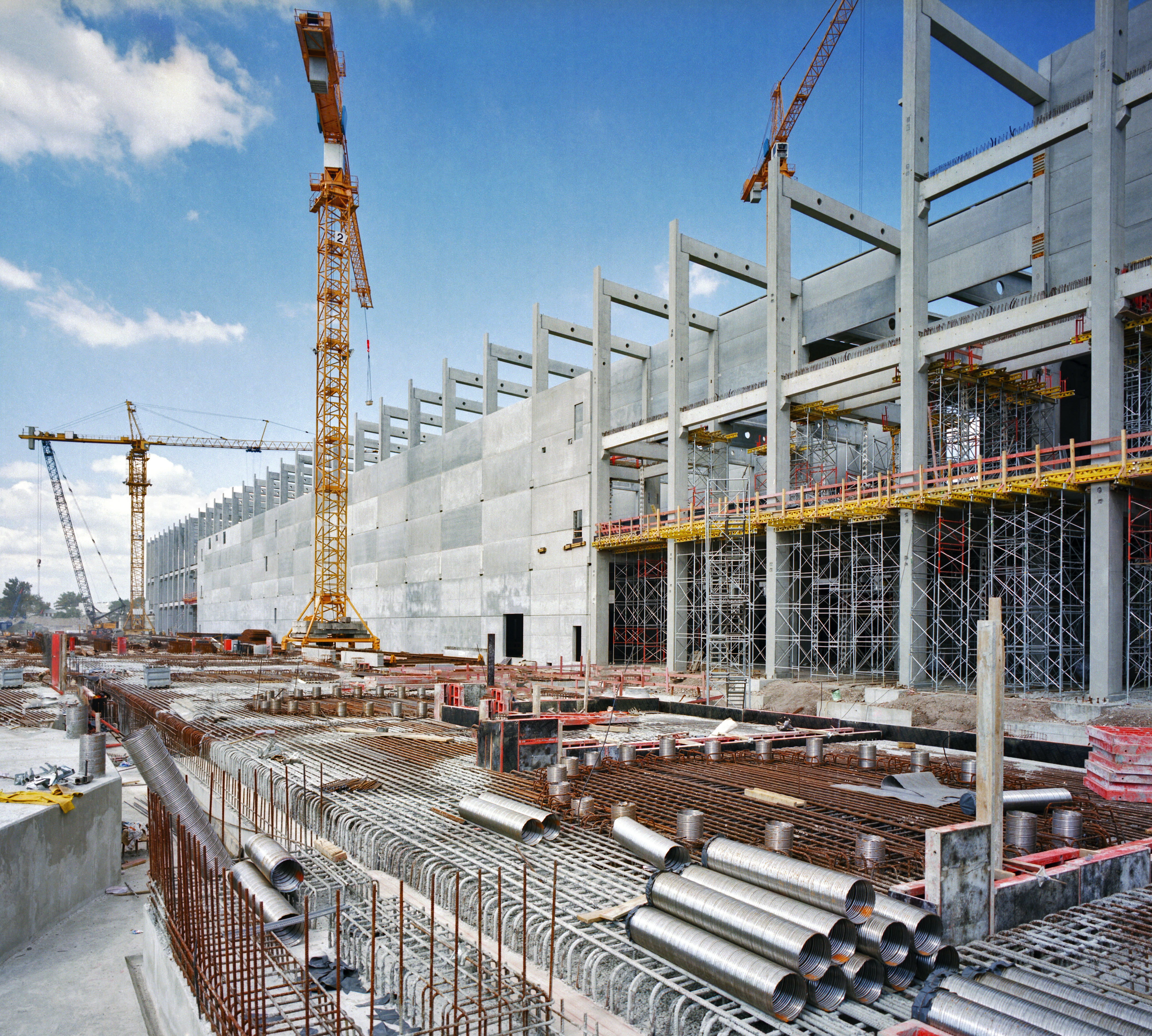
The commercial construction industry has never been static, but the pace of change today is difficult to ignore.
Economic pressures, workforce challenges, technological advancements, and shifting investment priorities are transforming how projects are planned, staffed, and executed. Organizations that can adapt to these changes will be better positioned to manage risk, maintain productivity, and capitalize on emerging opportunities.
As we move through 2026, here are six trends reshaping the commercial construction landscape.
- Labor Shortages Continue to Challenge Project Delivery
The skilled labor shortage remains one of the industry’s most pressing concerns.
While demand for construction projects remains strong across many sectors, the supply of experienced electricians, low-voltage technicians, project managers, estimators, and other skilled professionals continues to lag.
Many organizations are competing for the same talent pool, making recruitment and retention increasingly important components of project success.
For contractors and project owners alike, workforce planning can no longer be treated as an afterthought. Successful organizations are identifying staffing needs earlier, developing talent pipelines, and building relationships with workforce partners who understand their specific labor requirements.
The projects may be temporary, but the workforce strategy needs to be long-term.
- Material Cost Volatility Is Driving Smarter Procurement Strategies
Although supply chain conditions have improved compared to previous years, material pricing remains unpredictable.
Changes in trade policies, transportation costs, global demand, and manufacturing capacity continue to influence pricing across key construction materials.
As a result, many organizations are rethinking traditional procurement strategies.
Earlier purchasing decisions, stronger supplier relationships, diversified sourcing approaches, and increased forecasting have become essential tools for managing project budgets and reducing risk.
Companies that can effectively balance cost control with supply certainty are often better equipped to keep projects on schedule.
- Data Centers Are Fueling Significant Construction Growth
Few sectors are experiencing growth at the pace of data centers.
The continued expansion of cloud computing, artificial intelligence, digital infrastructure, and data storage requirements is creating unprecedented demand for new facilities nationwide.
Large-scale hyperscale campuses, edge computing facilities, and modular data center deployments are generating substantial opportunities for contractors, skilled trades professionals, and technology infrastructure specialists.
With project timelines often measured in months rather than years, organizations must balance speed, quality, and workforce availability to meet growing demand.
As AI adoption accelerates, many industry experts expect data center construction activity to remain a major driver of growth for the foreseeable future.
- Semiconductor and Life Sciences Investments Continue to Expand
Manufacturing and life sciences construction remain key areas of investment.
Government incentives, domestic manufacturing initiatives, and growing demand for advanced technologies have contributed to increased activity in semiconductor fabrication facilities and related infrastructure projects.
Similarly, pharmaceutical, biotechnology, and research organizations continue to invest in new facilities and expansions designed to support innovation and future growth.
These projects often require highly specialized skill sets, strict compliance standards, and complex project coordination, creating both opportunities and workforce challenges for organizations involved in their delivery.
- Regional Growth Patterns Are Creating New Opportunity Zones
Not all construction markets are growing at the same rate.
Certain regions continue to attract significant investment due to factors such as business-friendly policies, infrastructure development, energy availability, and population growth.
States across the Sun Belt and other rapidly growing markets have seen increased activity in commercial construction, industrial development, data centers, and advanced manufacturing.
For contractors and workforce leaders, understanding regional trends is becoming increasingly important when making decisions about expansion, recruiting strategies, and resource allocation.
Where a project is located can be just as important as the project itself.
- Artificial Intelligence Is Transforming Construction Operations
Artificial intelligence is no longer a future concept. It is becoming an operational reality.
Construction organizations are exploring AI-powered solutions to support scheduling, project planning, resource forecasting, risk management, safety monitoring, and productivity analysis.
While AI will not replace the skilled professionals responsible for building projects, it has the potential to improve decision-making and help teams work more efficiently.
Organizations that embrace technology while continuing to invest in people may find themselves at a significant competitive advantage in the years ahead.
Looking Ahead
The commercial construction industry is entering a period defined by both opportunity and complexity.
Workforce shortages, evolving technology, changing investment priorities, and economic uncertainty are creating new challenges for organizations across the industry. At the same time, growth in sectors such as data centers, semiconductors, and life sciences is generating significant opportunities for those prepared to respond.
The organizations that succeed in 2026 and beyond will be those that remain agile, invest in workforce planning, embrace innovation, and adapt quickly to changing market conditions.
At Fieldlink, we’re seeing these trends firsthand as organizations adapt to changing workforce demands, emerging technologies, and evolving project requirements. While the challenges may look different from project to project, one thing remains consistent: success depends on having the right people, strategy, and resources in place to keep work moving forward.
In today’s environment, adaptation is no longer optional. It is becoming one of the industry’s most valuable competitive advantages.
About Fieldlink
Fieldlink (www.fieldlink.net) is the conduit to success in the network infrastructure and low-voltage industries. We specialize in building genuine connections between skilled professionals and leading integrators through data-driven talent solutions and deep industry expertise.
As a national staffing firm and Certified Women’s Business Enterprise (WBE), we provide specialized field deployment solutions across the U.S. for sectors including Data Centers, Audio Visual, Electronic Security, and Enterprise Cabling. Our comprehensive services include contract and surge staffing, contract-to-hire, direct placement, and Recruiting as a Service (RaaS).
Built by industry insiders, Fieldlink is comprised of former technicians, project managers, and executives who "speak integrator." We are committed to fostering a culture of integrity and excellence, ensuring our candidates find rewarding career paths and our clients build the dependable, high-quality teams they need to scale nationwide.